
What 13 years of the Cassini mission taught us about Saturn
An ocean under the crust of Enceladus, methane lakes on Titan and the age of the rings.
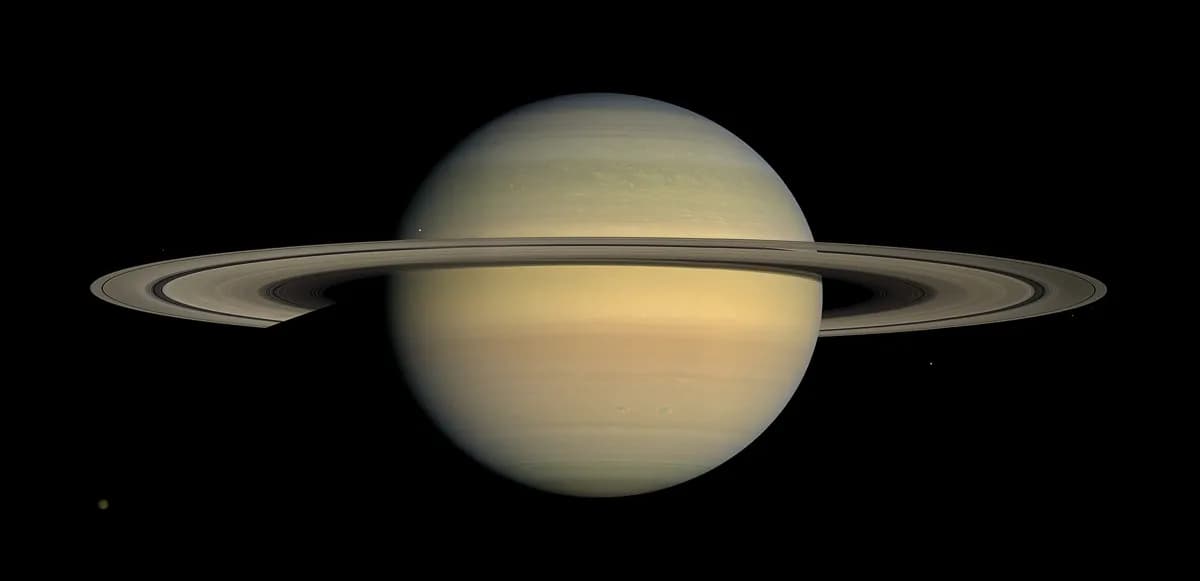
The Cassini probe entered orbit around Saturn in 2004 and worked until September 2017, when it was deliberately steered into the planet's atmosphere.
The headline discovery was the geysers of Enceladus. Jets of water vapour carrying salts and organics erupt from cracks near the moon's south pole. That means a subsurface salty ocean and hydrothermal activity on its floor.
On Titan the spacecraft, together with the Huygens lander, found a full cycle of liquid — only with methane and ethane instead of water: lakes, rivers, rain and dunes of organic particles.
The final orbits between the planet and the rings made it possible to measure their mass. The rings turned out to be light and probably young — on the order of a hundred million years old, which means they appeared while dinosaurs were alive.