
How CERN finds particles that live for billionths of a second
The particle itself is never seen — it is reconstructed from the debris.
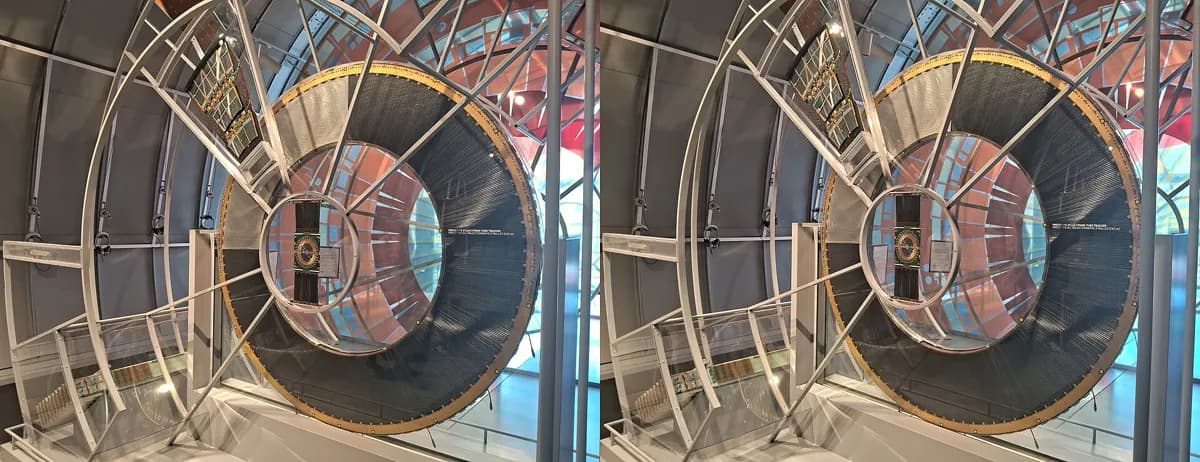
The Large Hadron Collider accelerates protons to nearly the speed of light and collides them at four points where detectors the size of an apartment block are installed.
The Higgs boson lives about 10⁻²² seconds and decays without covering even the width of an atomic nucleus. Registering it directly is impossible — the decay products are recorded and the original mass is reconstructed.
The problem is statistics. The event of interest turns up roughly once in ten billion collisions, while similar background processes run constantly. A discovery is declared at five standard deviations — a probability of coincidence below one in three million.
There is so much data that most of it is discarded in real time: a dedicated trigger system decides in microseconds which event to keep and which to erase forever.