
What actually happened 66 million years ago
An asteroid, the Chicxulub crater and a layer of iridium across the planet.
At the boundary between the Cretaceous and the Palaeogene about 75% of species disappeared, including all non-avian dinosaurs. Clay of that age everywhere in the world is anomalously rich in iridium — an element rare in the crust but common in asteroids.
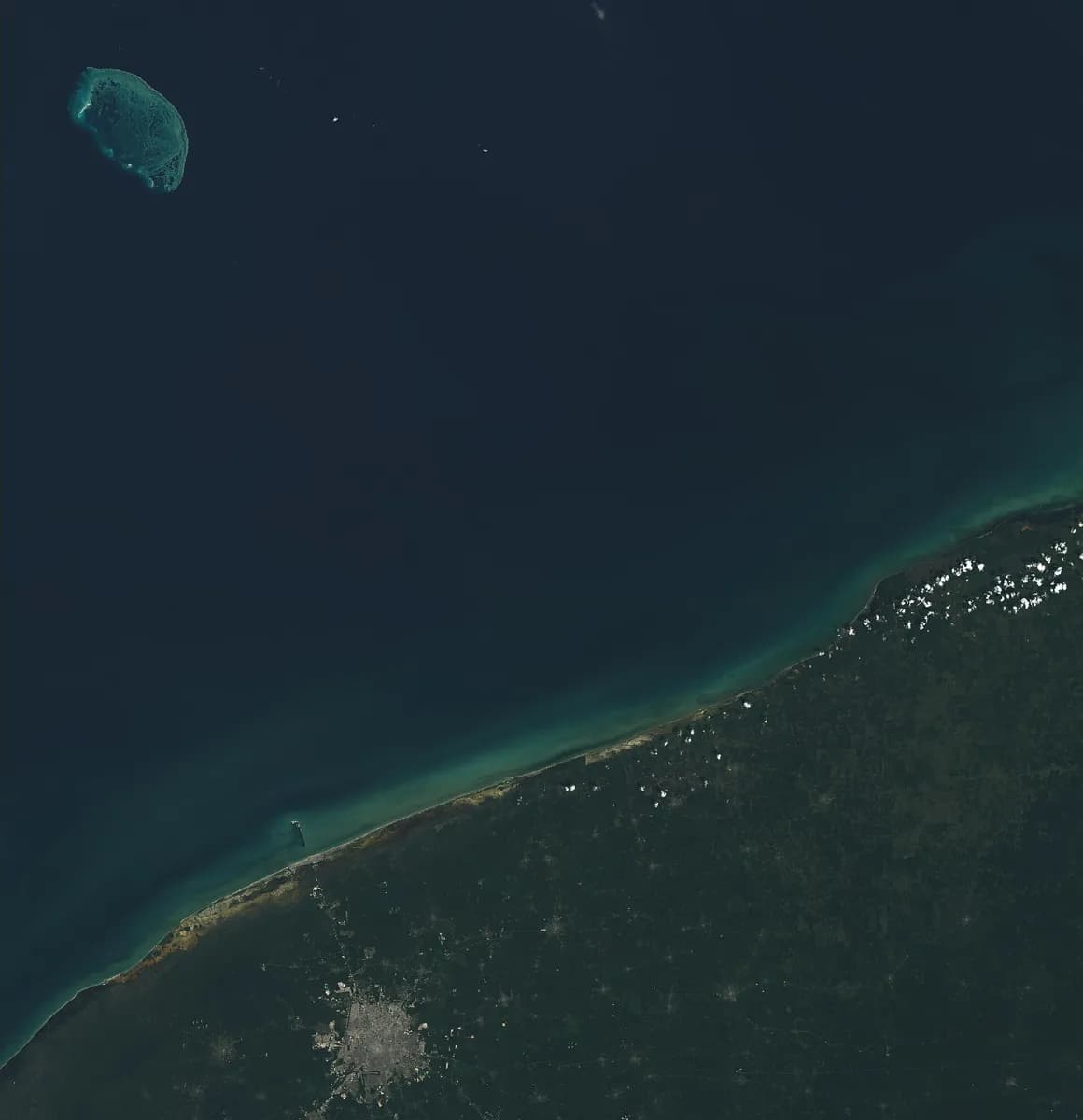
The source was found in the 1990s: the Chicxulub crater on the Yucatán Peninsula, about 180 kilometres across. Its age matches the boundary layer to within tens of thousands of years.
The impact of a body roughly 10 kilometres wide threw sulphur from vaporised rock into the atmosphere. For years the aerosols shut out sunlight, temperatures fell and photosynthesis in the ocean nearly stopped — food chains collapsed.
The Deccan Traps played their part too — vast lava outpourings in India that lasted hundreds of thousands of years. Most researchers think the volcanism weakened ecosystems and the asteroid delivered the finishing blow.