
The double-slit experiment: the result nobody can explain
Electrons go through one at a time and still produce interference.
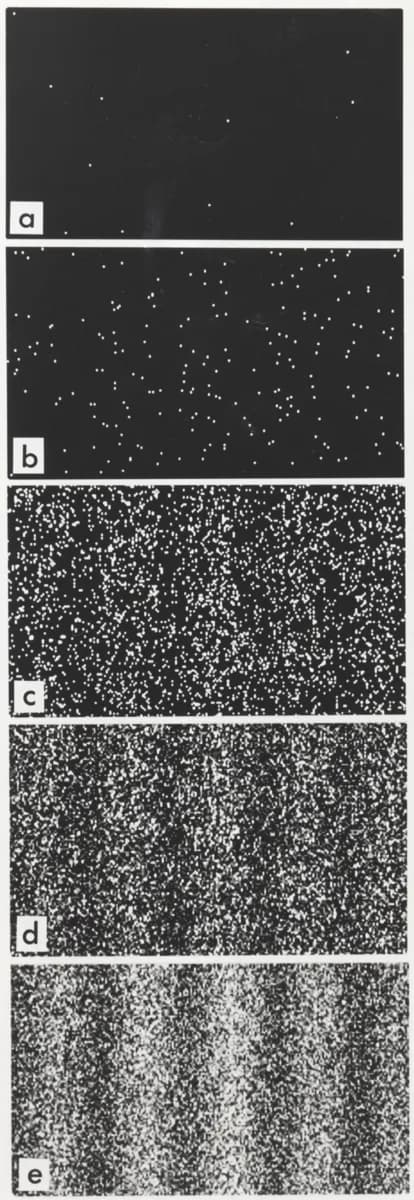
Shine light on a plate with two narrow slits and the screen shows alternating bands — an interference pattern. For a wave that is exactly what you would expect.
The strangeness starts with particles. Electrons are fired one at a time, spaced so that two can never physically be inside the apparatus at once. Each leaves a single dot on the detector. Yet after a few hours the dots add up to the same bands.
It gets stranger. Install a detector that determines which slit the electron went through and the interference disappears — two ordinary patches remain. The mere act of obtaining information about the path changes the result.
The experiment has been reproduced with photons, electrons, atoms and even molecules made of hundreds of atoms. The mathematics describes what happens flawlessly; agreement about what it means physically is still missing.