
The first image of a black hole: how they built a telescope the size of Earth
Eight observatories on four continents worked as a single antenna.
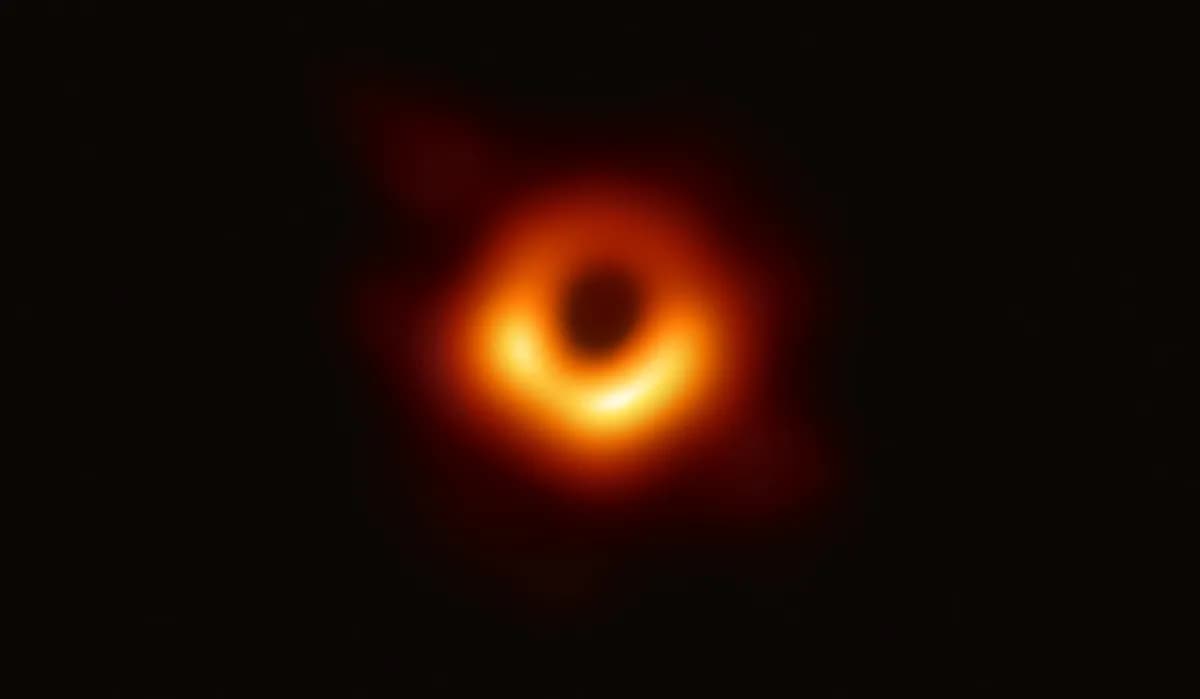
In April 2019 the Event Horizon Telescope collaboration released the first image in history of a black hole's shadow — the object at the centre of the galaxy M87, with a mass of roughly 6.5 billion Suns.
To resolve a detail that small on the sky, you need a telescope the diameter of a planet. They built one virtually: eight radio observatories from Hawaii to the South Pole observed the target simultaneously, and the signals were synchronised by atomic clocks. The technique is called very long baseline interferometry.
There was so much data that sending it over the network was impossible — about five petabytes travelled physically on hard drives. The disks from the South Pole waited half a year for the Antarctic winter to end.
The dark patch in the centre is not the hole itself but its shadow: the region from which photons cannot escape. The bright ring around it is superheated matter whose light is bent by gravity.