
Spinosaurus: the dinosaur that could swim
Dense bones and a paddle-like tail rewrote what we thought theropods did.
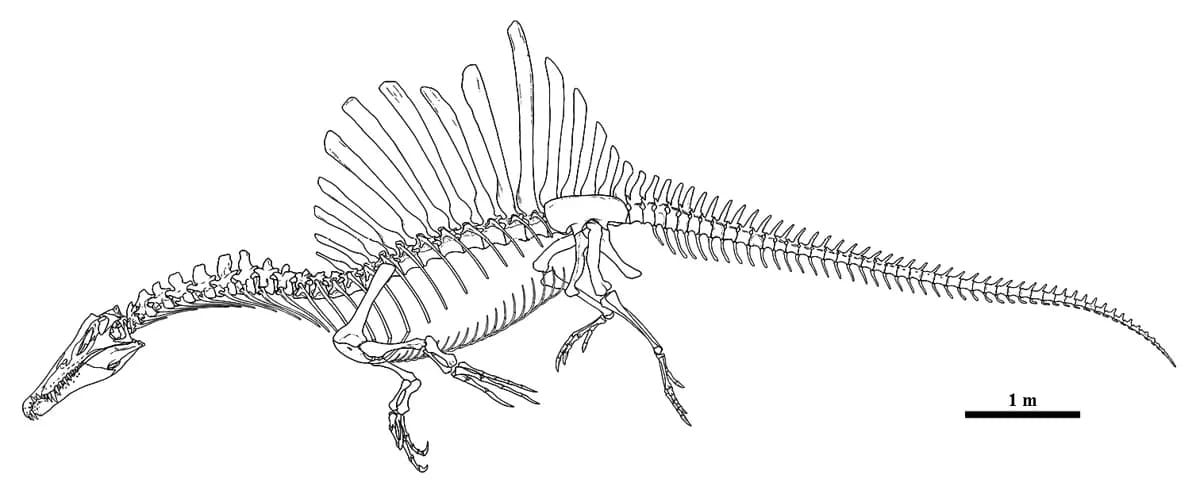
Spinosaurus is the largest known predatory dinosaur, up to 15 metres long, with its distinctive sail of elongated neural spines.
The first bones, found in Egypt early in the twentieth century, were destroyed in the bombing of Munich in 1944. For almost a century the animal was known only from drawings and descriptions.
New finds in Morocco overturned the picture. Spinosaurus turned out to have dense bones with no marrow cavity — a structure that works as ballast and is found in penguins and manatees. The nostrils are set far back and the limbs are shortened.
In 2020 the tail was described: tall, flexible, with long spines — effectively a paddle. Hydrodynamic tests of a model showed thrust several times higher than the tails of land-living theropods. Spinosaurus hunted in the water rather than wading along the shore.