
Tyrannosaurus: what we know about the best-studied predator of the Mesozoic
Bite force, running speed and the endless argument about feathers.
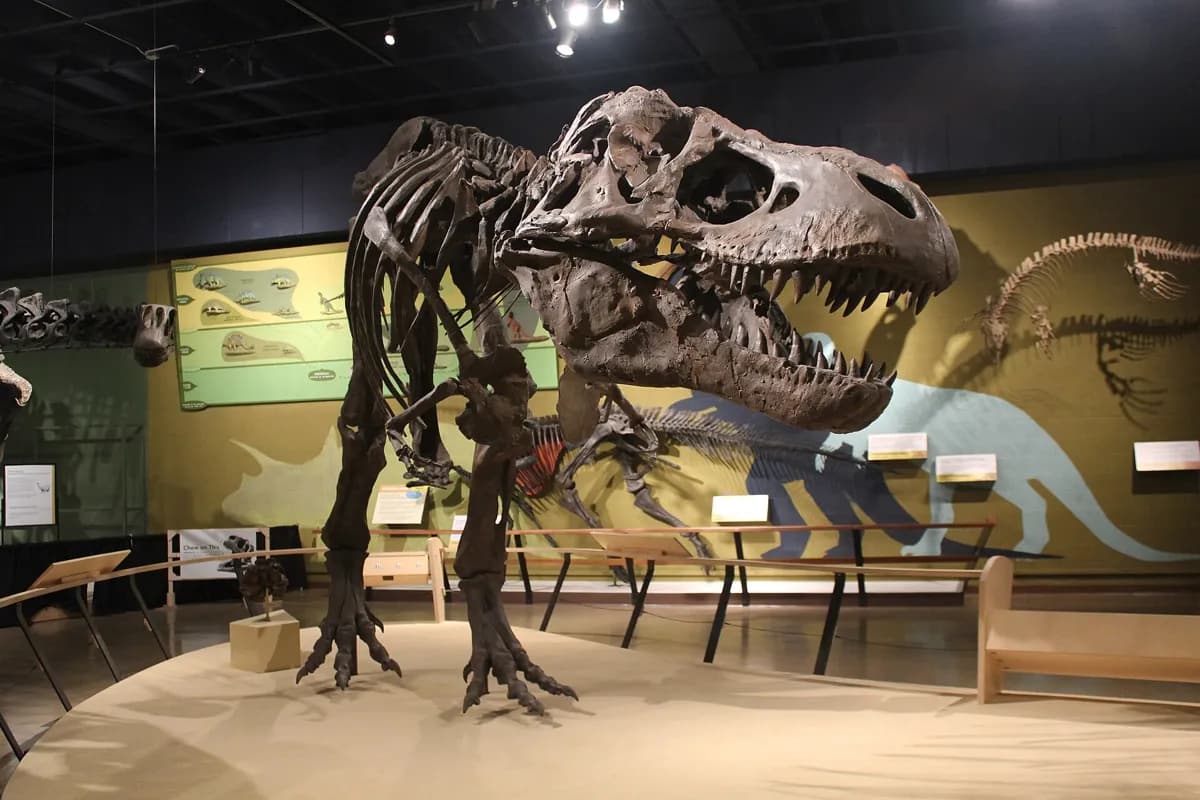
Tyrannosaurus rex lived at the end of the Cretaceous, about 68–66 million years ago, in what is now North America. More than fifty skeletons of varying completeness have been found — by palaeontological standards that is a great many.
Calculations of jaw mechanics give a bite force on the order of 35,000 newtons, a record among land animals. Tyrannosaur teeth did not slice but crush: prey bones carry characteristic punctures alongside bone that was pulverised.
Running is more complicated. Modelling the loads on the skeleton shows that above 25–30 km/h the leg bones would not have held. An adult tyrannosaur most likely walked quickly rather than ran.
Feathers are still debated. Related tyrannosauroids such as Yutyrannus have feather coverings preserved right there in the rock, but skin impressions from T. rex itself show scales. The compromise view: feathers on juveniles and on some parts of the body.