
Why Mars lost its atmosphere and its water
It comes down to a core that stopped turning and the missing magnetic field.
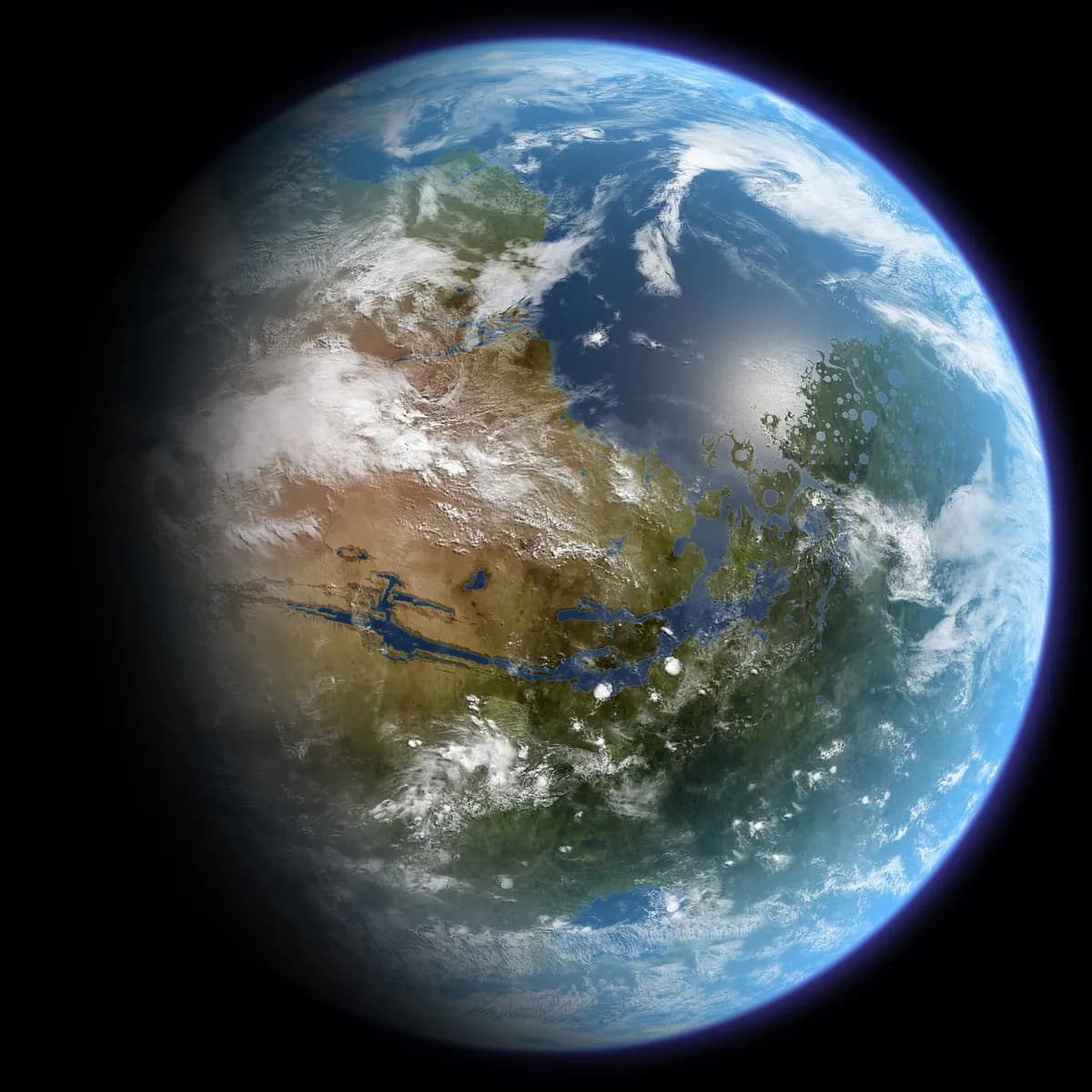
Valleys, river deltas and minerals that only form in water leave no doubt: about 3.5 billion years ago Mars had liquid water and a dense atmosphere.
The key reason for the loss is size. Mars is roughly half Earth's diameter and cooled faster. Once the liquid core stopped circulating, the global magnetic field that shielded the planet from the solar wind disappeared with it.
The MAVEN spacecraft measured exactly how the atmosphere escapes: charged particles in the solar wind literally strip away the upper layers. The rate of loss rises sharply during solar flares.
Some of the water did not go anywhere — it is locked in the polar caps and in minerals in the crust. But the planet can no longer restore its former climate on its own.